
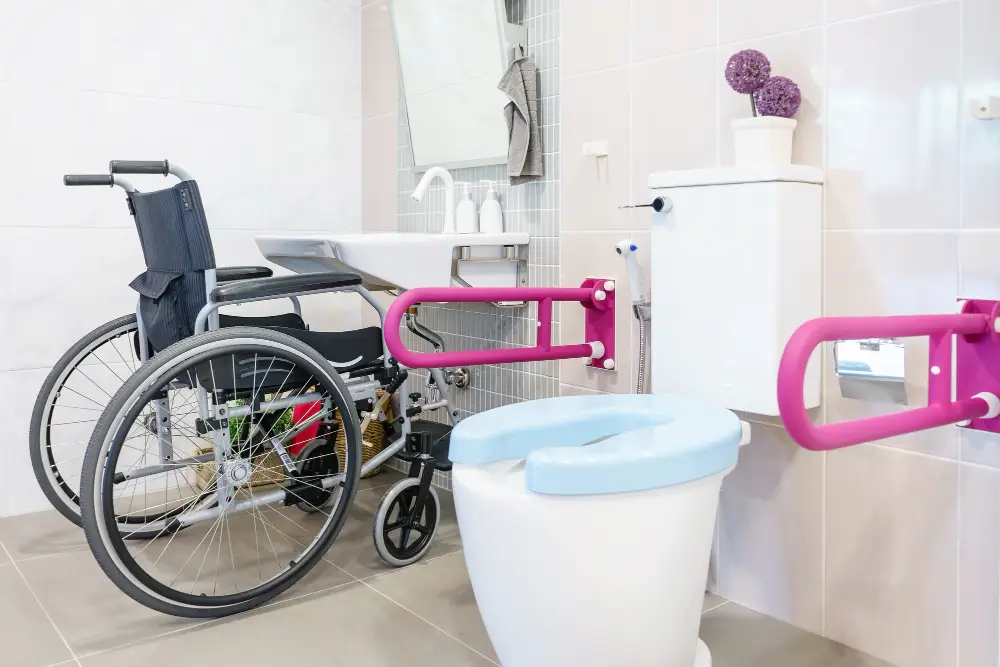
Setting up a bathroom for a wheelchair user is different from setting one up for someone who walks with balance issues. The bars go in different spots. The heights change. The transfer dynamics matter more than they do for any other user. Getting the setup right means the wheelchair user can manage the bathroom independently, which makes a huge difference in daily life. Pairing the install with non slip floor treatment East King County homeowners book for safer surfaces rounds out the whole bathroom.
Here’s a practical guide to handicap grab bar setup for a wheelchair user’s bathroom.
The Three Key Transfers
A wheelchair user’s bathroom design centers on three transfer movements. Wheelchair to toilet. Wheelchair to shower or shower seat. Wheelchair to sink area if grooming happens at the sink.
Each transfer has different bar placement needs. The bars should support both the move out of the chair and the move back in, since those are different motions for the body.
Toilet Setup
The toilet is the most-used fixture in the bathroom and the spot where most wheelchair transfers happen.
Side Wall Grab Bar
A horizontal bar on the wall beside the toilet, mounted at 33 to 36 inches above the floor. This bar should be at least 42 inches long, starting no more than 12 inches from the back wall. Length matters here because the user grips the bar at one position to pivot out of the chair and at another to lower themselves onto the seat.
Rear Wall Grab Bar
A horizontal bar on the wall behind the toilet, mounted at 33 to 36 inches above the floor and at least 36 inches long. This bar gives support while sitting and helps with the push back up to standing or to wheelchair height.
Toilet Height
The toilet itself should be at chair height, which is usually 17 to 19 inches off the floor. That makes the transfer between chair and toilet a side slide rather than an up-and-down motion. A raised toilet seat can get a standard toilet to chair height if a full replacement isn’t an option.
Shower Setup
Wheelchair users typically transfer from the chair to a shower seat or bench rather than standing in the shower. The bar placement supports that transfer and the seated bathing that follows.
Transfer Bar Outside the Shower
A horizontal bar on the wall just outside the shower entrance, at chair height, gives support during the pivot from wheelchair to shower seat.
Bar Inside the Shower on the Control Wall
A horizontal bar on the wall where the shower controls live, mounted around 33 to 36 inches above the floor. This bar lets the user pull themselves toward the controls and stabilize during washing.
Bar on the Back Wall
A horizontal bar on the back wall of the shower for general support while seated. Length should be at least 36 inches to give multiple grip positions.
Roll-In Shower Setup
If the bathroom has a roll-in shower (no threshold), bars go on three walls. Each at least 48 inches long, all mounted at 33 to 36 inches above the floor. This setup supports the full transfer plus seated bathing.
Shower Seat or Bench
The seat itself matters as much as the bars around it.
Wall-Mounted Fold-Down Seat
A fold-down seat attached to the wall folds out of the way when not in use and locks into position when needed. Best for showers that need to work for both wheelchair users and other family members.
Transfer Bench
A bench that extends from outside the tub or shower to inside lets the user slide across rather than lifting up and over. Best for tub showers that haven’t been converted to walk-in.
Roll-In Chair
A waterproof wheelchair the user transfers into outside the bathroom and rolls directly into the shower. Requires a roll-in shower with no threshold.
Sink Area
A sink that works for a wheelchair user has a few specific features.
Open Underside
The sink needs open space underneath for the wheelchair to roll under. Pedestal sinks don’t work. A wall-mounted sink or an accessible vanity with the cabinet removed underneath works.
Lever Faucet Handles
Lever handles are easier to operate than knobs for hands with limited grip strength. Single-lever faucets that mix hot and cold in one motion work best.
Side Support Bar
A short vertical or horizontal bar near the sink gives support during grooming if the user needs to lean forward into the mirror.
Floor & Threshold Considerations
The floor underneath all of this matters too.
No Thresholds
Shower thresholds become barriers for wheelchairs. A roll-in shower removes the threshold entirely. If a remodel isn’t happening, a portable threshold ramp can bridge the gap temporarily.
Slip-Resistant Surfaces
Wet floors plus a wheelchair with smooth wheels is a real risk. Slip-resistant tile or treated floors keep the wheelchair from sliding during a transfer. This is one of those small details that prevents big problems.
Clear Turning Space
ADA standards call for a five-foot turning circle in a wheelchair-accessible bathroom. Most existing bathrooms don’t have that, but moving fixtures or reorganizing the space can free up the necessary clearance.
Coordination With an Occupational Therapist
For wheelchair users with specific medical needs, getting an OT involved in the bathroom design is worth the effort. They watch how the user actually moves, point out things a contractor might miss, and recommend specific bar placements based on real transfer mechanics.
The right setup gives a wheelchair user real independence in the bathroom, which matters more than almost any other single change in the home.