Licensed #EASTGB744B1. Insured. Senior discounts available. Eastside Grab Bars is owned and operated by Mark Costello, and the business installs shower grab bars that hold firm through years of daily use, steam, and soap. Every bar goes in with the right anchors, the right sealant, and placement that matches how the user actually steps in and out.
The shower is the single most dangerous room in the house for seniors. Wet tile, slippery soap, and the step over a tub wall make a bad combination. A pair of well-placed shower grab bars turns that risk around. Residents of Issaquah, Bellevue, Redmond, Sammamish, Kirkland, Newcastle, and anywhere in East King County can get the bars their shower actually needs.
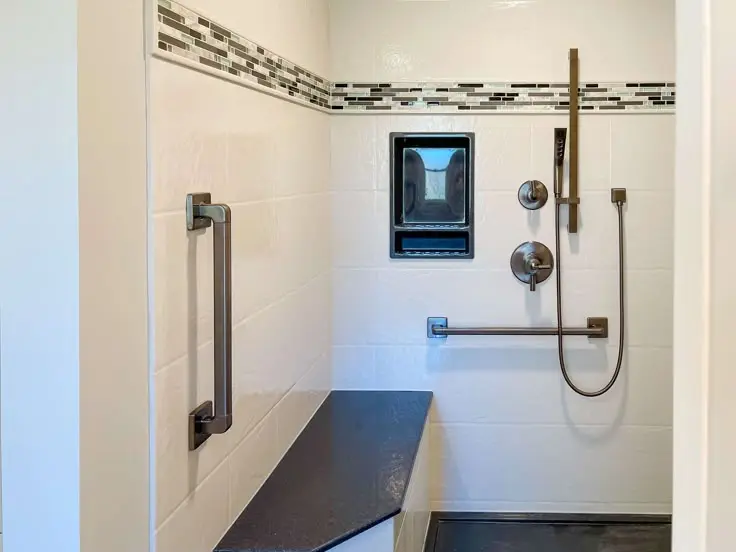
More than 80 percent of bathroom falls happen near the tub or shower, and most of those happen while stepping in or out. A shower grab bar mounted at the entry point gives a wet hand something solid to grip during the exact moment balance is most at risk. A second bar inside the shower supports the user while washing, shaving, or turning.
Shower bars also handle conditions no other bar in the house has to. Standing water, steam, soap residue, and cleaning chemicals all attack a poorly installed bar. Loose silicone lets water into the wall. Cheap anchors corrode. A bar that feels solid during install can pull loose two years later if the wrong hardware was used. Eastside Grab Bars installs marine-grade anchors, waterproofs the mounting points with silicone rated for wet areas, and uses flanges that seal against the tile surface.
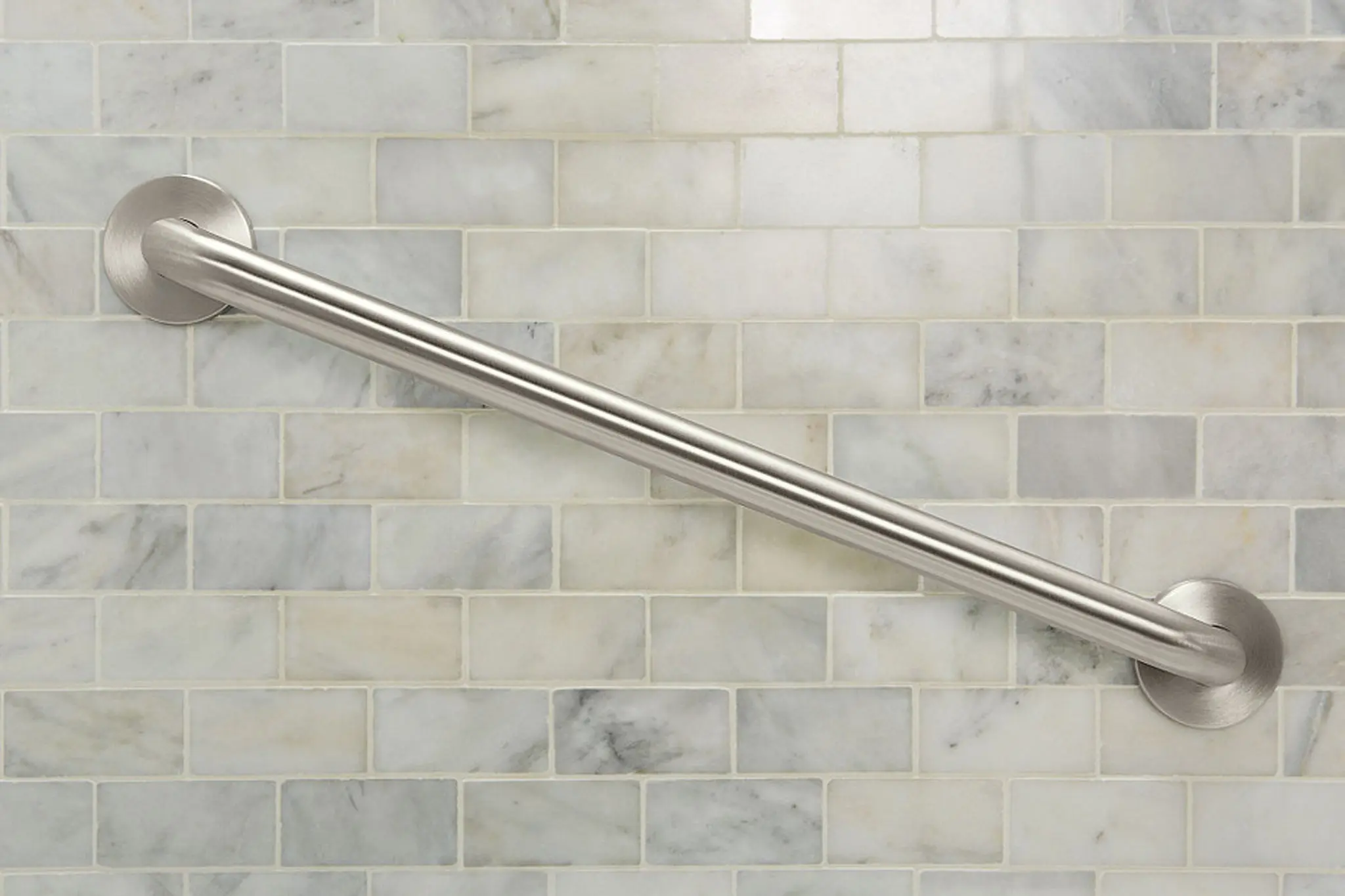
The bars installed are stainless steel, solid brass, or coated aluminum rated for wet environments. Finishes include polished chrome, brushed nickel, matte black, and oil-rubbed bronze. The anchor hardware behind the flange matters more than the finish most people see. Stainless or rust-proof anchors go in so the bar holds up in a wet shower for its full life, not just the first year.
Shower work has to be clean, sealed, and built to last. Here is how it happens.
A call or email starts with a description of the shower. Tile, fiberglass surround, walk-in, tub-shower combo, corner shower, each one has its own install considerations. Ten minutes on the phone tells the installer what to expect.
An on-site visit follows. The step-in motion gets watched: right foot first or left foot first, where the balance hand naturally goes, where the user holds on while washing. Wall construction gets checked, studs behind the tile get located, and placement gets marked. A written quote arrives before work is scheduled.
Diamond-tip bits rated for ceramic, porcelain, or stone drill slowly to avoid cracking, and every penetration is sealed with silicone rated for wet areas. Bars anchor to studs or to heavy-duty toggle anchors rated for over 250 pounds. Every bar is pressure-tested before the install is complete.
Before leaving, Mark walks the user through the shower with the new bars in place so the hand learns exactly where to land. A check-in a few weeks later confirms the seals are holding and the bar still feels solid.
Mark founded Eastside Grab Bars after watching his own aging family members stop showering on their own because it felt too risky. A few bars in the right spots gave them back one of the most private and important parts of daily life. After retiring from the US Small Business Administration in Seattle in 2021, he turned that experience into a local business.
Mark holds the Aging in Place Home Safety Advisor designation through Age Safe America. He also volunteers with Rebuilding Together Seattle, installing shower bars in homes across King County for low-income seniors. Every kind of shower wall this region builds has been drilled into: 1980s fiberglass surrounds, newer porcelain tile, handmade mosaic stone, and older ceramic from homes built decades ago. That experience shows what holds.
Yes. Fiberglass surrounds need a specific install approach because there is often empty space behind the wall. Heavy-duty toggle anchors designed for fiberglass go in, backed with a stainless steel backing plate when needed, and every mounting point is sealed so water never reaches the cavity behind the surround.
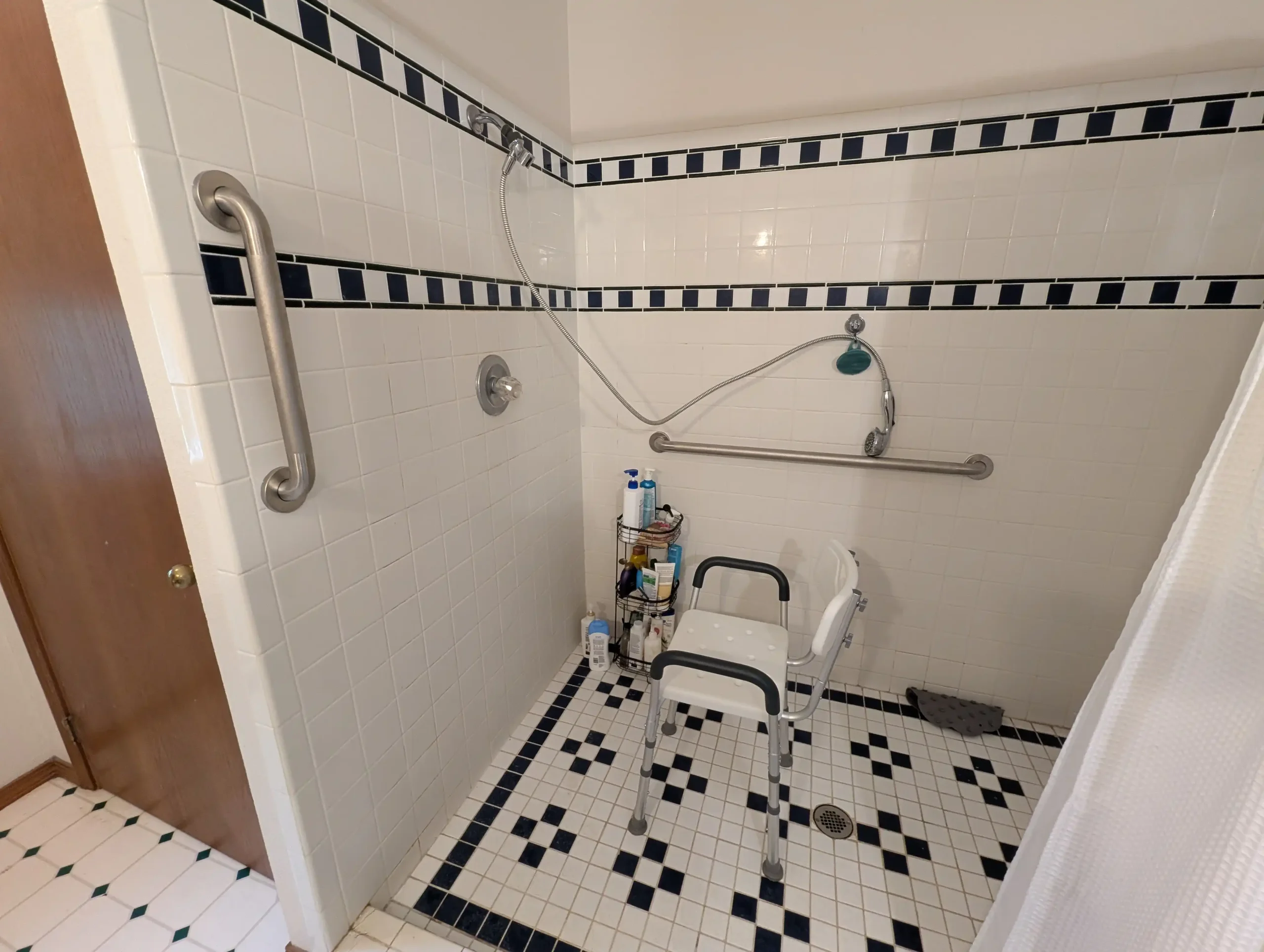
Most showers benefit from two bars. A vertical bar at the entry point for stepping in and out, and a horizontal or angled bar on the main shower wall for support while washing. A third bar makes sense if the user has a shower seat or significant balance concerns.
Not if they are installed right. Stainless steel, solid brass, or marine-grade coated bars with stainless anchor hardware hold up in Pacific Northwest bathrooms for years without a spot of rust. Cheap bars from big-box stores often rust within two years because the anchor hardware behind the flange is low grade, which is not something the package tells the buyer.
Call Mark at (425) 522-8663, or send a message through the contact form for a same-day response. A safer shower is often one short visit away.
Senior discounts are available.