
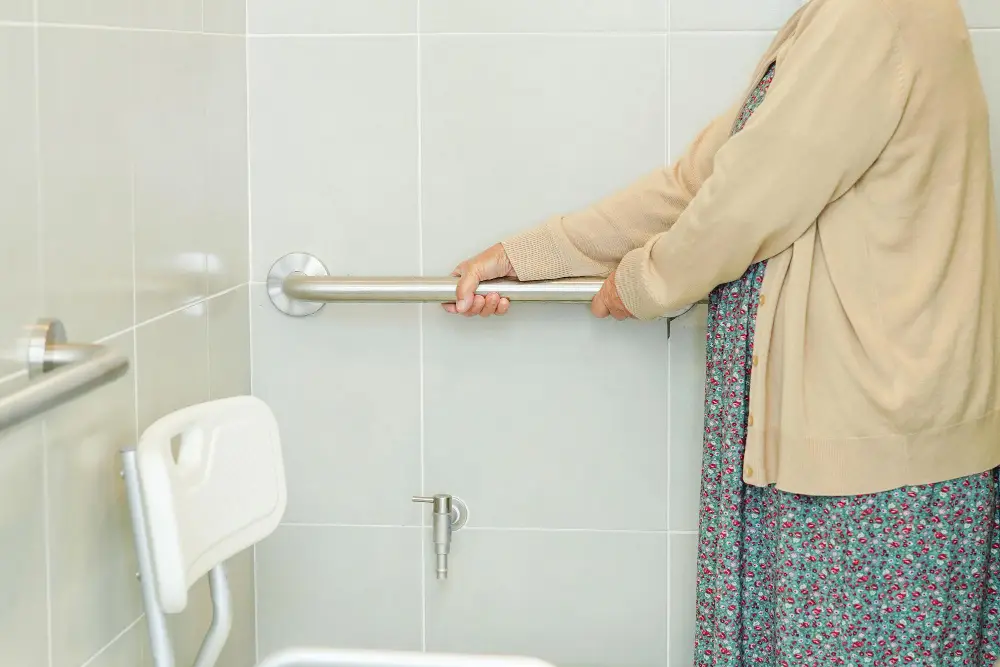
Picking grab bars feels simple until you stand in front of a wall of options at a home improvement store. Different lengths, different diameters, different shapes, and almost no clear guidance on which one fits your bathroom. Getting the sizing right matters because a bar that’s too short, too long, or the wrong thickness either doesn’t get used or feels awkward enough that confidence drops. A good senior home safety assessment East King County homeowners book usually starts with figuring out the right hardware for the specific bathroom.
Here’s how to think through length and diameter so you end up with bars that actually work.
Why Length Matters More Than People Think
A grab bar’s length affects how many grip options you have when you reach for it.
Too Short Limits Repositioning
A 12-inch bar gives you one grip spot. If your first grab isn’t quite right, there’s no room to slide your hand to a better position. For someone with a sudden slip, that one grip is what they get.
Too Long Wastes Wall Space
A 36-inch bar in a small bathroom takes up wall that could go to towel hooks, a second bar, or just open space. It’s also overkill for most standalone grip situations.
Length Should Match the Use
A bar near a toilet only needs to be long enough for a sitting and standing motion. A bar inside a shower needs to be long enough to support someone moving from one side of the shower to the other. Matching length to use is the goal.
Common Bar Lengths & Where They Fit
Here’s a quick guide to the standard lengths and what each one works for.
12-Inch Bars
Best for tight spots where space is limited. Common uses include near sinks, beside a toilet that sits close to a wall, or as a short vertical entry bar at the shower threshold. Twelve inches gives just enough room for a single solid grip without taking up much wall.
18-Inch Bars
The most common all-purpose size. Works well as a vertical entry bar at the shower, beside a toilet, or in a tight corner of the bathroom. Eighteen inches gives two or three grip positions, which covers most balance situations.
24-Inch Bars
Better for interior shower walls and longer reaches. A 24-inch horizontal bar along the back of the shower gives plenty of room to slide your grip up or down as you turn or wash. Also good for tubs where you need to support a sit-down motion.
36-Inch & Longer Bars
For wheelchair transfers, full-length tub support, or unusual setups where the user needs lots of grip surface to slide their hand along while moving. Common in handicap-accessible bathrooms but overkill for most standard senior bathrooms.
Choosing the Right Diameter
Diameter affects how the bar feels in the hand and how secure the grip is under stress.
The ADA Standard
The Americans with Disabilities Act sets grab bar diameter at 1.25 to 1.5 inches. That range isn’t arbitrary. It comes from research on how hands actually grip under pressure. A bar in that range lets fingers wrap fully around it without the grip getting weak.
Smaller Diameter
Anything below 1.25 inches is too thin for a secure grip under stress. The hand wraps too far and loses leverage. These bars look fine but fail when someone really needs them.
Larger Diameter
Anything over 1.5 inches is too thick for most hands. Fingers can’t wrap around it, and the grip slips when wet. Larger diameter bars exist for specialty uses but aren’t right for most home bathrooms.
Matching to Hand Size
For most adults, 1.25 inches works well. People with larger hands or stronger grip can go up to 1.5 inches comfortably. People with smaller hands, arthritis, or weak grip do better with the lower end of the range.
Wall Clearance
Diameter has a companion spec called wall clearance, which is how far the bar sits off the wall. ADA standard is 1.5 inches of clearance.
Why Clearance Matters
Too close to the wall and your fingers can’t wrap around the bar fully. Too far from the wall and your arm can slip behind the bar during a fall, which can dislocate a shoulder. The 1.5-inch standard gives full finger wrap without the arm-trap risk.
Grip Surface Choices
Beyond size, the surface of the bar affects grip.
Smooth Bars
Easy to clean and look sleek. Work fine for most situations but can feel slippery when hands are wet or soapy.
Textured or Knurled Bars
Better grip in wet conditions. Important for anyone with arthritis or weak hands. The texture takes less squeezing force to feel secure.
Plastic-Coated
Warmer to the touch than metal and offers good grip. Some users prefer this in colder bathrooms.
Putting It Together
For a typical Issaquah bathroom with a tub-shower combo and a toilet, here’s a reasonable starting setup. One 18-inch vertical bar at the shower entry. One 24-inch horizontal bar inside the shower. One 18-inch horizontal bar beside the toilet. All at 1.25-inch diameter with 1.5-inch wall clearance.
That setup covers the highest-risk moments, gives multiple grip positions, and stays within ADA specs. Adjust from there based on the specific bathroom and the person using it.
Getting the sizing right means a bar that gets used every day and earns its place on the wall.