The Somerset and Newport Hills neighborhoods on the south side of Bellevue share a common feature that shapes almost every conversation about home safety there. The homes sit on hillsides, which means most of them are multi-level, most have significant stair usage in daily life, and most have bathrooms on more than one floor. For aging residents in these neighborhoods, the fall risk picture looks different than it does in a flat-lot home in a newer development. This is a practical guide to how bathroom safety and multi-level fall prevention work together in these Bellevue hillside homes.
The Neighborhood Housing Stock
Somerset was developed in the late 1960s and 1970s on the west side of Cougar Mountain. The homes are mostly four-bedroom single-family houses built into the hillside, with primary bedrooms sometimes on the main level and sometimes upstairs. Split-level and tri-level layouts are common because the hillside makes flat single-level construction impractical on many lots.
Newport Hills sits east of Coal Creek Parkway and was developed earlier, mostly between the 1950s and the 1970s. The homes are similar in size but often older in style, with more original construction still in place and fewer major renovations than Somerset homes.
Both neighborhoods have aged along with their original owners. Many current residents bought their homes in the 1970s or 1980s and have raised families in them. Now those same residents are in their 70s and 80s, and the homes that worked well for young families do not always work well for aging bodies.
The Multi-Level Layout Problem
The single biggest safety issue in Somerset and Newport Hills homes is the number of stairs used in a typical day. A tri-level home has stairs between the entry level and the living areas, another set between the living areas and the bedrooms, and often a third set down to a basement or lower family room. A senior making four to six trips per day up and down these stairs is doing significantly more stair climbing than the average American adult, and the cumulative fall risk is much higher.
The bathrooms in these homes are usually placed on multiple levels. The primary bathroom is upstairs. A half bath or full bath is on the main level. Often a third bathroom is on a lower level. Making all of them safe for aging bodies requires more equipment and more planning than a single-story home.
The Stair Problem Comes First
For most Somerset and Newport Hills homeowners planning for aging in place, the stair fall risk is the first thing to address.
Adding a Second Railing
Most stairs in these older homes have a railing on only one side. Adding a second railing on the opposite wall gives the senior the option of using both hands going up or coming down. The change costs $300 to $700 per staircase and takes two to three hours.
The railings should be anchored into wall studs, not just into drywall. Both railings should return to the wall or the post at the top and bottom, so the hand has support through the last step in each direction.
Better Stair Lighting
Older Somerset and Newport Hills homes often have inadequate stair lighting. A single overhead light at the top of the stairs casts shadows on the treads below. Motion-sensor sconces mounted along the stair wall solve this problem for $75 to $200 per fixture plus $150 to $300 per install location.
For homeowners who want stair lighting that reads as a design feature, low-voltage LED strips installed along the underside of each stair tread cost $500 to $1,500 for a typical staircase and produce a lighting effect that adds visible value to the home.
Stair Lifts for Higher-Risk Residents
For residents who have started to feel real difficulty on stairs, a stair lift becomes worth considering. Straight stair lifts fit most of the primary staircases in Somerset and Newport Hills homes and cost $3,500 to $5,500 installed. Curved lifts for staircases with turns or landings cost $9,000 to $15,000.
A stair lift does not have to be permanent. Some Bellevue residents rent lifts during recovery periods or install them with the plan that the lift will be removed before the home is sold.
Bathroom Safety on Multiple Levels
Once the stair fall risk is addressed, the bathrooms themselves need attention.
The Primary Bathroom
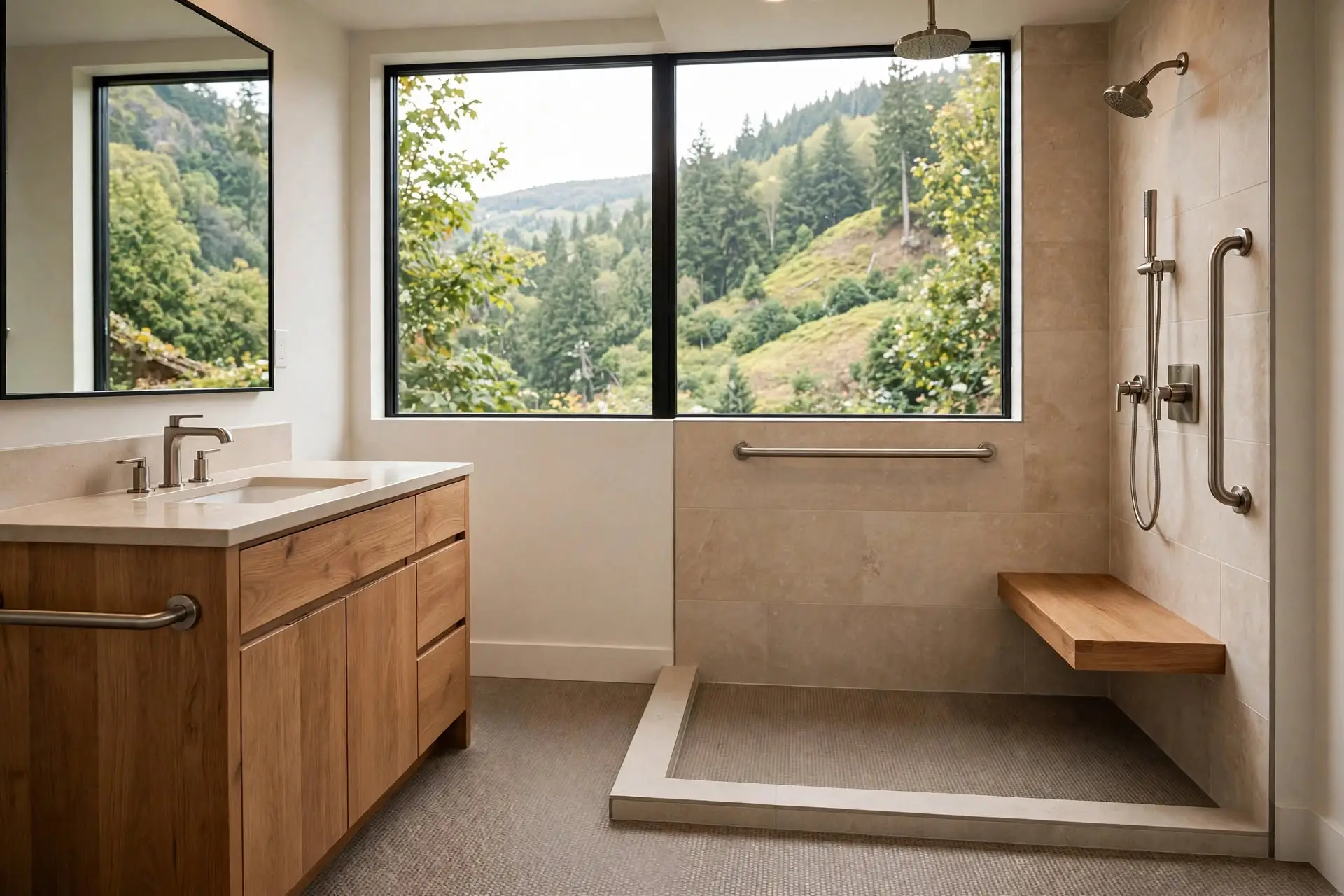
The primary bathroom, usually on the upper level, gets the most daily use and needs the most complete safety setup. This typically includes grab bars at the shower entry, in the shower, and at the toilet, a comfort-height toilet, and anti-slip floor treatment on the tile.
For older Somerset and Newport Hills homes, the primary bathroom often has a tub-shower combination that becomes harder to use safely as the resident ages. Grab bars can extend the useful life of the tub-shower for years. Eventually, many residents convert the tub-shower to a walk-in or curbless shower, which typically costs $9,000 to $18,000 in these homes depending on the layout and finish level.
The Main-Level Bathroom
The main-level bathroom is often the one the resident uses most during the day. Setting this bathroom up for full safety means grab bars at the toilet, a comfort-height toilet, and anti-slip floor treatment.
If the main-level bathroom is a half bath with no shower, and the primary bathroom is upstairs, some residents eventually convert the main-level bathroom into a full bath so they can stop climbing stairs to shower. This kind of conversion costs $10,000 to $25,000 depending on the plumbing situation and the space available.
The Lower-Level Bathroom
The lower-level bathroom in a Somerset or Newport Hills home is mostly used less often. The safety setup here can usually be lighter, focused on the fixtures the resident actually uses. Grab bars at the toilet and a comfort-height toilet covers most needs. Anti-slip floor treatment helps if the floor is tile.
Planning the Sequence
For most Somerset and Newport Hills residents, the right sequencing puts the stair fall prevention work first, followed by the primary bathroom setup, followed by the main-level bathroom, followed by the lower-level bathroom.
The stair work often costs $500 to $2,000 depending on how many railings need to be added and what lighting upgrades come with it. The primary bathroom setup typically costs $1,500 to $3,000 for the initial safety package. The other bathrooms usually add another $1,000 to $2,000 each depending on scope.
Doing the work in phases lets the household spread the cost over several years and lets each round of changes settle in before the next one starts. Most residents notice a real change in daily confidence within the first week of each phase, and the cumulative effect after all phases are complete is a home that continues to work for the resident for another decade or more.