Most falls among seniors happen at home, and the bathroom is where the majority of them occur. That’s not a scary statistic meant to worry anyone. It’s just the reality, and it’s also one of the most fixable problems in any house. A few targeted changes can cut fall risk by more than half, and most of them don’t require major renovation.
If you’re looking into senior bathroom safety East King County homeowners should plan for, here’s a full checklist to work through.
Floor Safety
The floor is the first thing to tackle because every fall ends there, and wet bathroom floors are one of the slickest surfaces in any house.
Non-Slip Mats Inside & Outside the Shower
A quality rubber-backed mat inside the shower and a thick absorbent mat just outside it makes a huge difference. The mat outside catches water dripping off after you step out, which is often when falls happen.
Anti-Slip Treatments on Tile
Some tile floors are fine dry but slick when wet. There are treatments that etch a light texture into tile without changing how it looks, and they last for years. Worth asking about if your bathroom has glossy tile.
Secure Any Loose Rugs
Throw rugs and bath mats without non-slip backing are trip hazards waiting to happen. Either tape them down, replace them with proper mats, or remove them.
Shower & Tub Safety
This is where most bathroom injuries happen. Getting in, getting out, and standing on a wet slick surface while soap is in your eyes adds up to real risk.
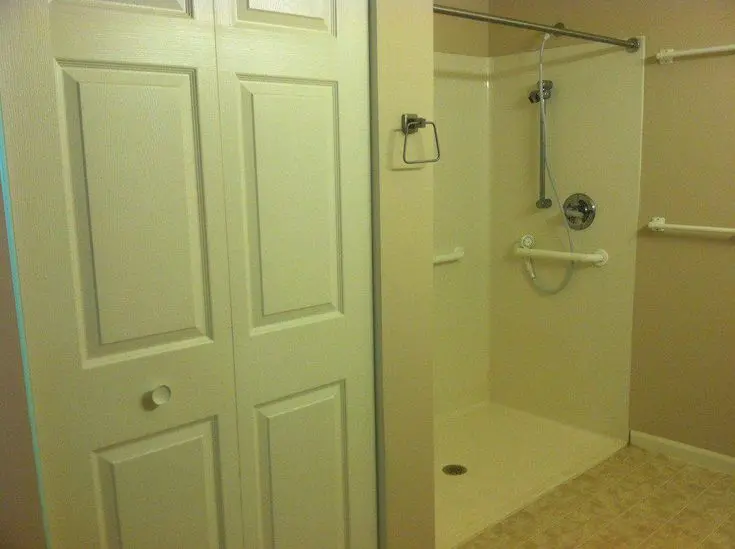
Grab Bars at the Entry
A vertical bar at the shower or tub entry gives you something to hold while stepping over the edge. This is the single most important bar in the bathroom.
Interior Shower Bars
One horizontal bar along the back or side wall gives you balance support while washing, turning, and rinsing.
Shower Seat or Bench
Sitting while showering takes a lot of the risk out of it. Teak benches, wall-mounted fold-down seats, and portable tub transfer benches all work. Pick based on the shower setup.
Handheld Showerhead
Swapping a fixed showerhead for a handheld model on a long hose lets you shower while sitting. It’s one of those small upgrades that changes how safely someone can bathe.
Step-In or Walk-In Showers
If your bathroom still has a high tub edge and bathing is getting harder, consider a walk-in shower conversion. It’s a bigger project but removes the biggest fall risk in the bathroom entirely.
Toilet Safety
The toilet gets used more than any other fixture in the bathroom, and getting on and off it is tough for anyone with knee, hip, or balance issues.
Grab Bar Beside the Toilet
If the toilet sits next to a wall, a horizontal or angled bar on that wall makes every use safer. If it doesn’t, a fold-up bar behind the toilet works well.
Raised Toilet Seat or Comfort-Height Toilet
Standard toilets sit 15 inches off the floor. Comfort-height toilets sit 17 to 19 inches, which is much easier on knees. A raised toilet seat adds 3 to 4 inches to an existing toilet without replacing it.
Toilet Safety Frame
A frame that sits around the toilet with built-in arms gives support without needing wall mounts. Good option for rentals or if wall construction doesn’t allow grab bars.
Lighting
Low light makes everything harder and more dangerous. Bathrooms especially need enough light to see wet floors, step heights, and fixtures clearly.
Bright Overhead Lighting
LED overhead fixtures with at least 800 lumens brighten the whole space. Swap out dim old fixtures.
Night Lights
Motion-activated night lights that turn on automatically when someone walks in prevent the classic middle-of-the-night bathroom fall. These cost under $20 each and matter more than most people realize.
Light Switch Placement
Switches should be reachable at the door, not inside the bathroom. Walking into a dark bathroom to find a switch is how falls start.
Sink & Vanity Area
This area gets skipped in most safety plans but matters more than people realize.
Sturdy Vanity
Pedestal sinks are pretty but offer nothing to grab. A vanity with a solid countertop gives a surface to lean on when balance shifts.
Short Grab Bar Nearby
A 12-to-18-inch vertical bar on a wall near the sink gives something to grab while standing at the mirror. Small addition, big difference.
Clear Counter Space
Cluttered counters mean reaching over things, which throws balance off. Keep daily-use items at the front and move everything else into drawers.
Water Temperature
Scalding is a real risk for seniors because skin is more sensitive and reaction time is slower.
Anti-Scald Valves
Thermostatic mixing valves limit how hot the water can get at the faucet. Installing one on the shower and sink prevents accidental burns from handle bumps.
Water Heater Temperature
Set your water heater to 120 degrees Fahrenheit max. That’s hot enough for all household needs and cool enough to prevent instant burns.
Emergency Planning
Even with every precaution, things happen. Plan for what comes after.
Medical Alert System
A wearable button that calls for help if pressed or if a fall is detected. Modern ones work through cellular networks so no landline is needed.
Unlockable Bathroom Door
Make sure the bathroom door can be unlocked from outside in an emergency. Standard privacy locks usually have a small slot on the outside that opens with a flathead screwdriver or a coin. Check yours.
Phone Accessibility
A cordless phone or cell phone within reach of the toilet and shower area. If someone falls and can’t get up, they need a way to call for help.
Working Through the List
Don’t try to do everything in one weekend. Start with the highest-risk items: grab bars in the shower, a shower mat, and brighter lighting. Those three changes cover most of the risk. Then work through the rest over a few weeks or months based on budget and how the person uses the bathroom.
Senior bathroom safety East King County homes need isn’t about making the bathroom look like a hospital. It’s about small thoughtful changes that let people keep their independence longer with a lot less fear.