The shower is the riskiest spot in any bathroom. Wet feet, slick tile, soap on the floor, and the constant in-and-out motion adds up to real fall potential. A properly installed grab bar handles that risk in a way nothing else can. Getting shower grab bars Redmond bathrooms actually need to be installed correctly the first time, saves money, prevents falls, and gives the people using your shower confidence they can move around without worry.
Here’s what goes into a solid shower grab bar install and what to expect from the process.
Why Shower Grab Bars Are Different From Other Bathroom Bars
Shower bars deal with conditions no other bar in the house has to handle. Water hits them every day. Soap residue builds up. Steam works its way into mounting points. Cleaning chemicals attack hardware over time. A bar installed without these factors in mind might feel solid on day one and fail two years later when the anchor hardware corrodes or the silicone seal cracks.
A real shower install uses different hardware, different sealant, and different drilling techniques than a bar mounted on a regular bedroom or hallway wall.
Wet-Area Hardware Matters
Stainless steel anchors, marine-grade screws, and corrosion-resistant flange hardware are non-negotiable for shower installs. Standard hardware from a hardware store rusts within a year or two in a wet environment. The visible part of the bar might look fine while the mounting hardware behind the wall slowly fails.
Sealing Every Penetration
Every screw that goes through the tile or shower wall needs silicone rated for wet areas. That seal stops water from working its way into the wall behind the shower, which is how mold and rot get started. A bar without proper sealing causes problems that show up years later as soft drywall or a mildew smell.
Where Shower Grab Bars Belong
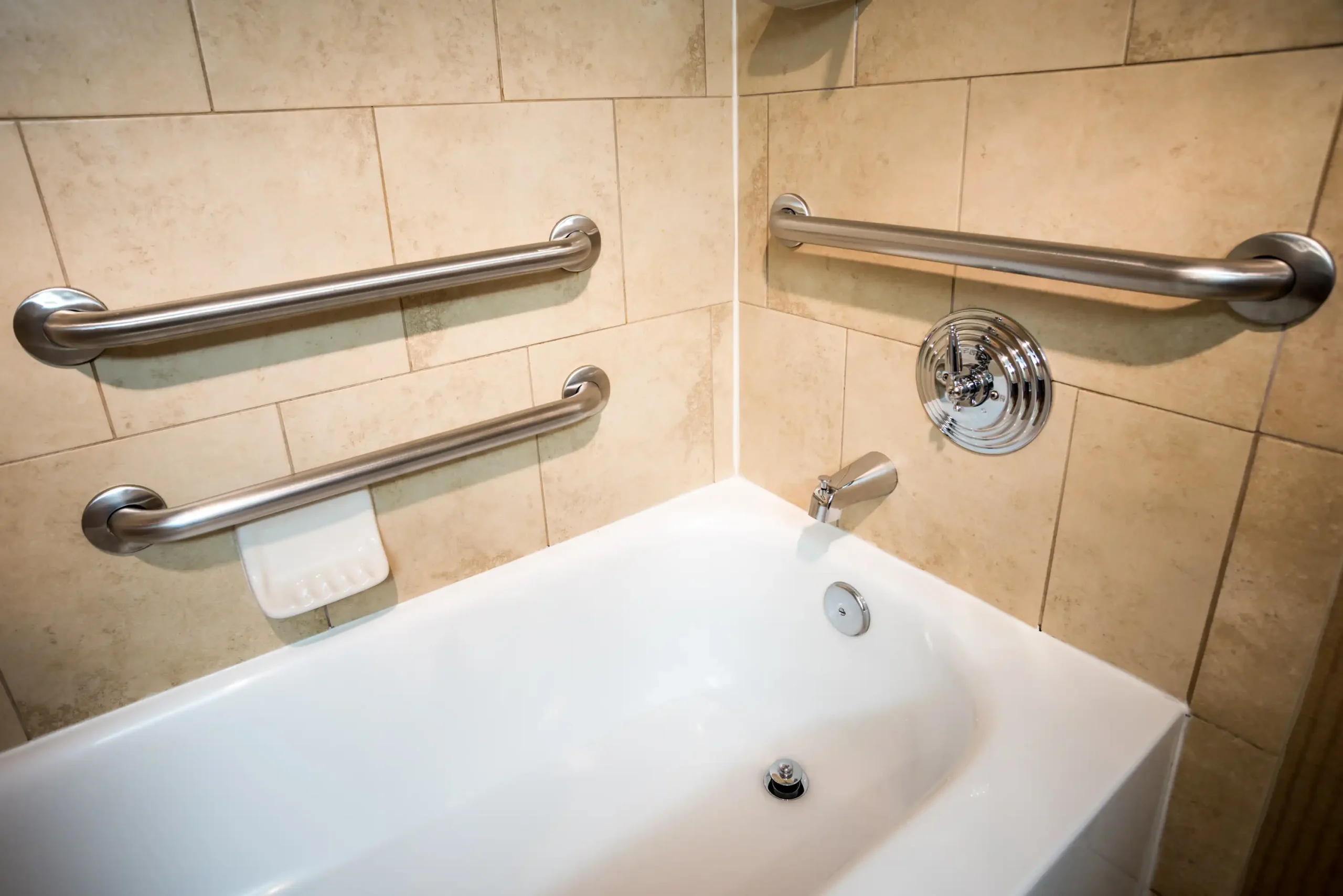
Most showers benefit from two bars at minimum. A third makes sense if anyone in the household has serious balance issues or uses a shower seat.
Vertical Bar at the Entry
The single most important shower bar is a vertical one mounted at the entry point. This is the bar a wet hand reaches for while stepping in or out, which is the riskiest moment of any shower. Mount it so the bottom sits between 32 and 38 inches off the floor and the top extends a foot or so above that. The vertical orientation works because it accepts a grip at any height.
Horizontal Bar Along the Back or Side Wall
Inside the shower, a horizontal bar mounted around 34 inches above the floor gives support while turning, washing, or rinsing. Those motions throw balance off more than people realize. The horizontal bar gives a hand somewhere reliable to land.
Angled Bar for Shower Seats
If anyone in the house uses a shower seat or sits while bathing, an angled bar mounted at roughly 45 degrees works better than a flat horizontal one. It gives support both going down to sit and pushing up to stand.
What a Solid Install Actually Looks Like
A bar mounted into a stud or heavy-duty blocking holds 250 to 500 pounds of pull force without flinching. Getting there means doing a few things right.
Locating Real Wall Framing
Tile shower walls hide what’s behind them. A stud finder works through some tile types but struggles with others, especially older mosaic or natural stone. Sometimes locating studs takes a small inspection hole or working from measurements taken from the other side of the wall. The bar goes where the framing is, not where it would look prettiest.
Heavy-Duty Toggle Anchors When Needed
Some shower walls do not have studs in the spot where a bar belongs. In those cases, toggle anchors rated for grab-bar loads are required. Standard drywall anchors fail under real weight. Toggle bolts designed for grab bars distribute load across a wider section of wall and hold up to 250 pounds or more when installed correctly.
Diamond-Tip Drilling for Tile
Drilling through tile takes a diamond-tip bit and slow steady pressure. Going too fast cracks tile. Using the wrong bit shatters the surface. The hole gets started with painter’s tape over the tile to prevent the bit from skating, then drilled at low RPM with light pressure until the tile is through.
What Goes Wrong Without Professional Installation
A lot of shower bar installs fail because of small mistakes that add up.
Drywall-Only Mounting
A bar attached to drywall with regular screws will pull out the first time someone leans on it hard. Drywall holds about 10 pounds of weight without proper anchoring. A grab bar needs to hold 250 pounds at minimum.
Wrong Sealant
Using the wrong silicone or skipping sealant entirely lets water reach the wall cavity. That means mold inside the wall within a year and structural damage within a few years.
Wrong Anchor Hardware
Plastic drywall anchors fail under shock load. Cheap toggle bolts bend. Hardware not rated for wet environments rusts and weakens over time. The wrong anchor is invisible until the bar comes loose.
Bad Placement
A bar in the wrong spot does not get used. If it is too far from the entry point, too high, or at the wrong angle, the user reaches for it once, finds it awkward, and goes back to grabbing the soap dish. Placement based on how the person actually moves matters more than placement based on a generic chart.
Choosing a Bar That Lasts
Stainless steel and solid brass bars hold up best in shower environments. Coated aluminum works too if the coating is rated for wet use. Avoid cheap bars from big-box stores where the visible chrome might look fine but the anchor hardware behind the flange is low-grade steel that rusts within two years. Spending $40 instead of $20 on the bar itself, plus another $100 on professional installation, gives you a bar that lasts decades. Cheap shortcuts cost more in the long run.
A safer shower is one good install away from being reality.