
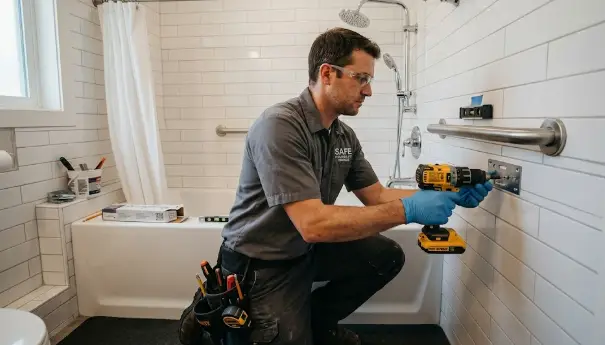
Bathrooms are one of the most common locations for household slips and falls. Wet surfaces, limited space, and the challenge of entering or exiting a bathtub can increase the risk of injury for seniors, individuals with mobility limitations, and even healthy adults. This is why many homeowners ask: where to install grab bar in bathtub?
The answer depends on your bathtub layout, user needs, and safety goals. Properly positioned grab bars provide stability, improve accessibility, and help prevent dangerous falls. Whether you’re planning a bathroom safety upgrade, aging-in-place renovation, or accessibility improvement, understanding the best grab bar locations is essential.
Short Answer: Where to Install Grab Bar in Bathtub?
The safest locations for grab bars in a bathtub are:
- On the wall where users enter and exit the tub
- Along the bathtub’s side wall for support while standing or sitting
- On the back wall for additional balance and stability
For maximum safety, grab bars should be securely anchored into wall studs and positioned according to the user’s height, mobility level, and bathtub design. Professional Grab Bar Installation helps ensure long-term durability, proper weight support, and reliable performance.
Why Proper Grab Bar Placement Matters
Preventing Slips and Falls in the Bathroom
Bathrooms consistently rank among the highest-risk areas in a home for fall-related injuries. A properly installed grab bar gives users a secure point of contact when stepping into or out of a bathtub, significantly reducing accident risks.
Who Benefits Most from Bathtub Grab Bars?
Grab bars are beneficial for:
- Seniors aging in place
- Individuals recovering from surgery
- People with balance challenges
- Those with disabilities or mobility limitations
- Pregnant individuals
- Anyone seeking additional bathroom safety
Common Accidents Caused by Incorrect Grab Bar Placement
Poor placement can create a false sense of security. Common issues include:
- Bars positioned too high or too low
- Insufficient support near entry points
- Improper anchoring
- Bars located outside comfortable reach
Safety Benefits of Professionally Installed Grab Bars
Professional installers understand wall structures, weight requirements, and ideal positioning. Correct installation ensures grab bars can withstand substantial force without loosening or failing over time.
Where to Install Grab Bar in Bathtub: Recommended Locations
Entry Wall Grab Bar Placement
The entry wall is often the most important location. A vertical or angled grab bar installed near the tub entrance helps users maintain balance when stepping over the tub edge.
Benefits include:
- Improved stability during entry and exit
- Reduced slipping risk
- Easier weight transfer
Side Wall Grab Bar Placement
A horizontal grab bar installed along the side wall offers continuous support while standing, sitting, or repositioning inside the bathtub.
This placement is particularly useful for:
- Seniors
- Individuals with limited mobility
- Bathtub-shower combinations
Back Wall Grab Bar Placement
A grab bar on the back wall provides extra support while bathing and changing positions. It can help users remain stable when seated or standing.
Combination Grab Bar Configurations for Maximum Safety
Many experts recommend using multiple grab bars instead of relying on a single support point. A combination of entry, side, and back wall grab bars creates comprehensive protection throughout the bathing process.
Where to Install Grab Bar in Bathtub for Seniors
For seniors, a combination of vertical and horizontal grab bars usually offers the best support. Placement should focus on ease of access and natural hand positioning during movement.
Where to Install Grab Bar in Bathtub for Individuals With Mobility Challenges
Users with mobility limitations often benefit from customized placements tailored to wheelchairs, transfer benches, walkers, or other assistive devices.
Understanding Different Types of Bathtub Grab Bars
Horizontal Grab Bars
Horizontal bars provide continuous support and are ideal for maintaining balance while moving along the bathtub.
Vertical Grab Bars
Vertical bars are excellent for assisting with entry and exit movements because they allow users to pull themselves upward naturally.
Angled Grab Bars
Angled grab bars combine the advantages of vertical and horizontal designs, offering flexibility for different movements.
Corner Grab Bars
Corner-mounted grab bars maximize support in smaller bathrooms where wall space is limited.
Textured and Slip-Resistant Grab Bars
Textured surfaces improve grip even when hands are wet, enhancing overall bathroom safety.
Grab Bar Placement Recommendations by Bathtub Type
Standard Bathtubs
A vertical entry bar combined with a horizontal side-wall bar typically provides sufficient support.
Bathtub-Shower Combos
Since users stand while showering, multiple grab bars are often recommended to improve safety throughout the bathing area.
Walk-In Tubs
Walk-in tubs generally require fewer entry-assistance bars but benefit from strategically placed interior support bars.
Deep Soaking Tubs
Due to increased depth, additional support points may be necessary to assist users when lowering themselves into and rising from the tub.
Accessible and ADA-Inspired Bathroom Designs
Accessible bathroom layouts often incorporate multiple grab bars positioned to accommodate a variety of users and mobility levels.
Grab Bar Placement Comparison Table
| Grab Bar Location | Primary Purpose | Best For | Advantages | Considerations |
|---|---|---|---|---|
| Entry Wall | Entering and exiting tub | All users | Immediate support | Requires stud location |
| Side Wall | Standing and sitting stability | Seniors | Continuous support | May require longer bar |
| Back Wall | Balance while bathing | Limited mobility users | Additional stability | Customized placement needed |
| Vertical Bar | Transition support | Entry assistance | Natural grip position | Limited lateral support |
| Angled Bar | Multi-directional support | Various users | Versatile functionality | Precise installation required |
Step-by-Step Guide to Choosing the Best Grab Bar Location
Step 1: Identify High-Risk Areas Around the Tub
Observe where users struggle most when entering, exiting, or moving within the bathtub.
Step 2: Determine User Needs and Mobility Requirements
Consider physical abilities, medical conditions, and future accessibility needs.
Step 3: Measure Available Wall Space
Accurate measurements ensure grab bars fit comfortably without interfering with fixtures.
Step 4: Locate Wall Studs
Stud-mounted installations provide the strongest and safest support.
Step 5: Select Appropriate Grab Bar Length and Style
Choose a design that complements both functionality and bathroom aesthetics.
Step 6: Mark Installation Points
Verify measurements carefully before drilling.
Step 7: Verify Reachability and Comfort
Users should be able to grip the bar naturally without overreaching.
Step 8: Complete Secure Installation and Safety Testing
Test stability thoroughly before regular use.
Factors to Consider Before Installing a Grab Bar
User Height and Reach
Grab bars should align with the user’s natural arm position for comfortable access.
Weight Capacity Requirements
Safety-rated grab bars should support substantial loads and comply with manufacturer specifications.
Wall Construction Materials
Tile, fiberglass, acrylic, and drywall surfaces may require different installation techniques.
Stud Availability
Stud placement influences optimal grab bar positioning.
Bathtub Layout and Bathroom Dimensions
Every bathroom has unique spatial considerations that affect installation options.
Future Accessibility Needs
Planning ahead can help accommodate changing mobility requirements over time.
Common Grab Bar Installation Mistakes to Avoid
Installing Into Drywall Without Proper Anchoring
Drywall alone cannot safely support body weight during a fall.
Placing Grab Bars Too High or Too Low
Poor positioning reduces effectiveness and comfort.
Choosing Decorative Bars Instead of Safety-Rated Grab Bars
Towel bars should never be used as safety devices.
Ignoring User Mobility Requirements
Every user has unique accessibility needs that should influence placement decisions.
Using Suction Cup Grab Bars as Permanent Solutions
Temporary suction products should not replace permanently installed safety grab bars.
Professional vs DIY Grab Bar Installation
Benefits of Professional Installation
Professional installation provides:
- Accurate placement
- Proper anchoring
- Long-term reliability
- Enhanced safety
Potential Risks of DIY Installation
DIY mistakes can compromise safety and lead to costly repairs or injuries.
When Professional Help Is Strongly Recommended
Professional installation is particularly important for:
- Tile walls
- Fiberglass surrounds
- Accessibility modifications
- Multiple grab bar configurations
How East Side Grab Bars Ensures Safe and Secure Installation
East Side Grab Bars specializes in bathroom safety solutions designed to improve accessibility and confidence. Their experienced installers assess individual needs, identify optimal grab bar locations, and ensure secure mounting for dependable long-term support.
People Also Ask: Related Questions About Bathtub Grab Bars
How High Should a Grab Bar Be Installed in a Bathtub?
Most installations place horizontal grab bars approximately 33 to 36 inches above the finished floor, although user needs may require adjustments.
Should Grab Bars Be Vertical or Horizontal in a Tub?
Both serve valuable purposes. Vertical bars help with entry and exit, while horizontal bars provide ongoing support during bathing.
Can You Install Grab Bars Without Studs?
Specialized anchors exist, but stud-mounted installations remain the safest and most reliable option.
How Many Grab Bars Should Be Installed in a Bathtub?
Many bathrooms benefit from two or three strategically placed grab bars for comprehensive support.
What Is the Best Length for a Bathtub Grab Bar?
Lengths vary depending on wall space and user needs, with 18-inch, 24-inch, and 36-inch bars being common choices.
Are Suction Grab Bars Safe for Bathtubs?
Suction grab bars may provide temporary assistance but should not be relied upon as primary safety devices.
Maintenance and Safety Checks After Installation
How Often Should Grab Bars Be Inspected?
Inspect grab bars every few months to ensure they remain secure and stable.
Signs a Grab Bar Needs Repair or Replacement
Watch for:
- Looseness
- Rust
- Cracks
- Damaged mounting hardware
Cleaning and Maintaining Bathroom Grab Bars
Regular cleaning prevents buildup and helps maintain a secure grip surface.
FAQs
Where is the safest place to install a grab bar in a bathtub?
The safest locations are typically the entry wall, side wall, and back wall, depending on user needs.
Can grab bars be installed on tile walls around a bathtub?
Yes. Professional installers can safely mount grab bars through tile while maintaining structural integrity.
What size grab bar works best for most bathtubs?
Most homeowners choose bars between 18 and 36 inches long based on available space and support requirements.
Is professional grab bar installation worth it?
Yes. Professional installation improves safety, durability, and overall effectiveness.
How much weight can a properly installed grab bar hold?
Most safety-rated grab bars support several hundred pounds when installed correctly according to manufacturer guidelines.
Are grab bars only for seniors?
No. Grab bars improve safety for people of all ages and mobility levels.
Can grab bars increase home safety and accessibility?
Absolutely. They are one of the most effective bathroom safety upgrades available.
How do I know if my grab bar is installed correctly?
A properly installed grab bar should feel completely secure, show no movement, and be anchored according to manufacturer specifications.
Conclusion
Key Takeaways on Where to Install Grab Bar in Bathtub
Knowing where to install grab bar in bathtub is essential for creating a safer and more accessible bathroom. The most effective locations typically include the entry wall, side wall, and back wall, providing support throughout the bathing process.
Choosing the Right Placement for Long-Term Safety
Every bathtub and user is different. The ideal placement depends on mobility needs, bathroom layout, wall construction, and future accessibility goals. Taking time to plan properly can significantly reduce fall risks and improve confidence.
Why Professional Installation From East Side Grab Bars Provides Peace of Mind and Reliable Bathroom Safety Solutions
While selecting the right grab bar location is important, secure installation is equally critical. East Side Grab Bars helps homeowners achieve both by providing professional assessments, expert placement recommendations, and dependable installation services that prioritize safety, accessibility, and long-term peace of mind.