
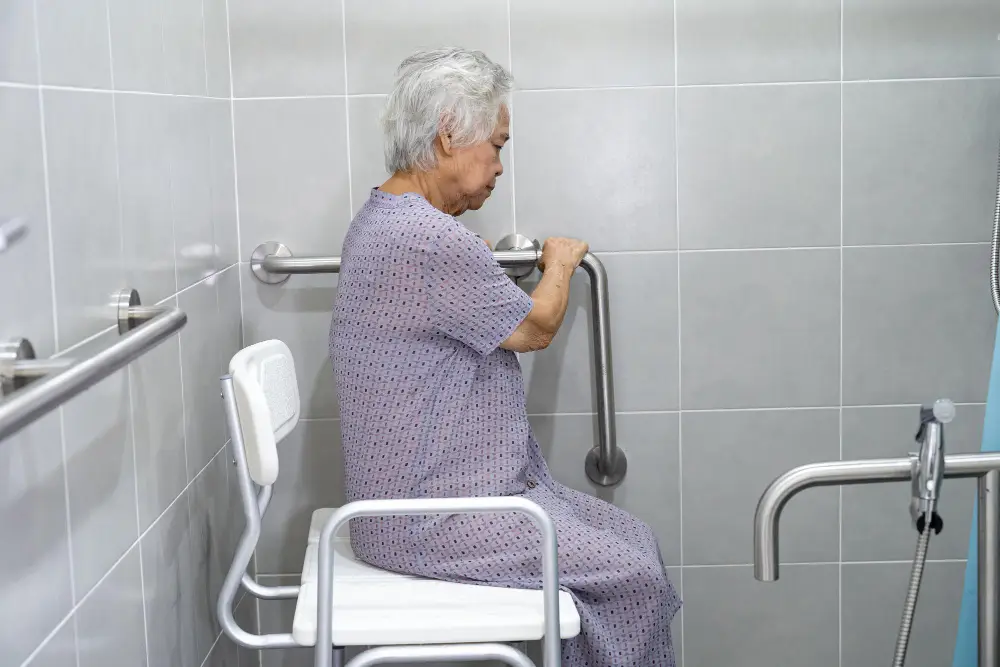
The bathroom causes more falls than any other room in the house, and it’s not random. There are about 10 specific spots in a typical bathroom where falls happen over and over. Knowing those spots lets you fix them one by one instead of trying to redo the whole bathroom at once. Pairing safety fixes with home lighting enhancement East King County homes benefit from rounds out the safety picture, since most of these spots get worse in low light.
Here are the top 10 fall spots and the quickest fixes for each.
1. The Shower Entry
This is the number one spot. Stepping over a tub edge or onto a wet shower floor with one foot up and the other foot still dry is a high-balance moment that catches a lot of seniors.
Quick Fix
Install a vertical grab bar at the entry. Add a non-slip mat just outside the shower to catch dripping water. Make sure the lighting hits the entry point clearly.
2. Inside the Shower
The wet floor, the soap, the shampoo in the eyes. Plenty goes wrong inside a shower even after the entry is handled.
Quick Fix
Add a horizontal grab bar on the back or side wall. Treat the floor with anti-slip chemical treatment if the tile is glossy. Switch to a handheld showerhead for users who can’t safely stand the whole time.
3. Stepping Out of the Shower
Falls on the way out happen as often as falls on the way in. Wet feet hit a dry floor, the body shifts weight, and balance fails.
Quick Fix
Use a thick absorbent mat just outside the shower with non-slip backing. The mat should be big enough that both feet land on it before the user takes a step.
4. Beside the Toilet
Getting on and off the toilet involves a controlled fall toward the seat and a strong push to stand back up. For seniors with weak knees or hip issues, this is one of the trickiest motions in the bathroom.
Quick Fix
Install a grab bar on the side wall beside the toilet at 33 to 36 inches above the floor. If the toilet isn’t next to a wall, a fold-up bar or a toilet safety frame works.
5. Standing Up From the Toilet
The push-up motion from a seated position takes more strength than people realize. Low toilets make it worse.
Quick Fix
Add a raised toilet seat to bring the height up to 17 to 19 inches. Or replace with a comfort-height toilet. Combined with the grab bar, this cuts the strength needed by a lot.
6. The Sink & Vanity Area
Standing at the sink to brush teeth, shave, or wash the face involves leaning forward into the mirror, which throws balance off more than it seems. Falls here happen during routine grooming.
Quick Fix
A short vertical grab bar on a wall near the sink, 12 to 18 inches long, gives somewhere to grab if balance shifts. Adding bright vanity lighting also helps because better visibility means less leaning toward the mirror.
7. Wet Bathroom Floor
Even outside the shower zone, bathroom floors get wet from drips, splashes, and steam. A glossy tile floor when wet is one of the slickest surfaces in any house.
Quick Fix
Apply anti-slip chemical treatment to the whole bathroom floor. It’s invisible once dry but adds real grip when the floor is wet. Adding a small absorbent rug with non-slip backing at the door catches tracked water.
8. Going to the Bathroom at Night
The nighttime walk from bedroom to bathroom is one of the top fall scenarios for seniors. Half-asleep, eyes not adjusted, hallway dark, bathroom dark when they arrive.
Quick Fix
Plug-in motion-activated night lights along the path from bedroom to bathroom. Under $20 each. Add one inside the bathroom too. The lights turn on as the user walks past and turn off after a minute, which doesn’t disrupt sleep.
9. Stepping Out of the Tub
For households that still use the tub, getting out is the riskiest part. Lifting one leg over a tub wall while the other leg is wet and on a slick tub bottom is high-fall potential.
Quick Fix
A tub transfer bench bridges the inside and outside of the tub so the user slides across rather than stepping over. Or a walk-in tub conversion removes the high edge entirely. Add a vertical grab bar at the tub edge for grip support.
10. The Bathroom Doorway
Walking into a dimly lit bathroom, especially at night, with eyes still adjusting from the bedroom. The doorway threshold itself can be a trip point if there’s any height difference.
Quick Fix
A motion-activated light just inside the doorway that turns on as the user walks in. Make sure the threshold is flush with the bathroom floor. If there’s a height difference, a small ramp or threshold piece can smooth the transition.
Putting It All Together
You don’t have to fix all 10 spots at once. Most households do the top three or four first, then add the rest over time. The order that makes the biggest immediate difference is usually grab bars in the shower and beside the toilet, anti-slip treatment on the floor, and motion-activated night lights along the nighttime path. Those four changes alone cut fall risk by a huge margin.
Working through the list one spot at a time turns a bathroom from one of the most dangerous rooms in the house into one of the safest. The fixes are mostly small, the costs are mostly low, and the impact on daily life is huge.