
The lighting in most Redmond homes was picked to make the space look good in real estate photos, not to actually work for someone with aging eyes. There is a big difference between the two. A dining room chandelier that looks stunning at a dinner party casts almost no light on the plate in front of a 70-year-old with age-related macular changes. A recessed can light in the kitchen ceiling puts a shadow across the exact spot where the cook is chopping vegetables. This is a walk through the lighting changes that actually matter for aging in place, based on what shows up in Redmond homes across Education Hill, Grass Lawn, and the newer developments along the light rail corridor.
Why Aging Eyes Need More Light
The physiology of aging vision is straightforward. The lens of the eye becomes less clear over time. The pupil becomes smaller and less responsive to changes in light. The retina becomes less sensitive to low light conditions. All of these changes add up to one practical result. A 65-year-old needs about three times more light to see clearly than a 25-year-old, and an 80-year-old needs about five times more.
The other factor is glare sensitivity. Older eyes take longer to adjust between bright and dim conditions, and they suffer more from glare than younger eyes. That means the lighting fix is not just about adding more brightness. It is about adding more light in the right places without creating glare that makes the visual problem worse.
Kitchen Task Lighting
The kitchen is where lighting matters most in daily life. Most Redmond kitchens have overhead lights that cast shadows exactly where the cook needs to see, and this becomes a real problem for anyone with aging vision.
Under-Cabinet Lighting
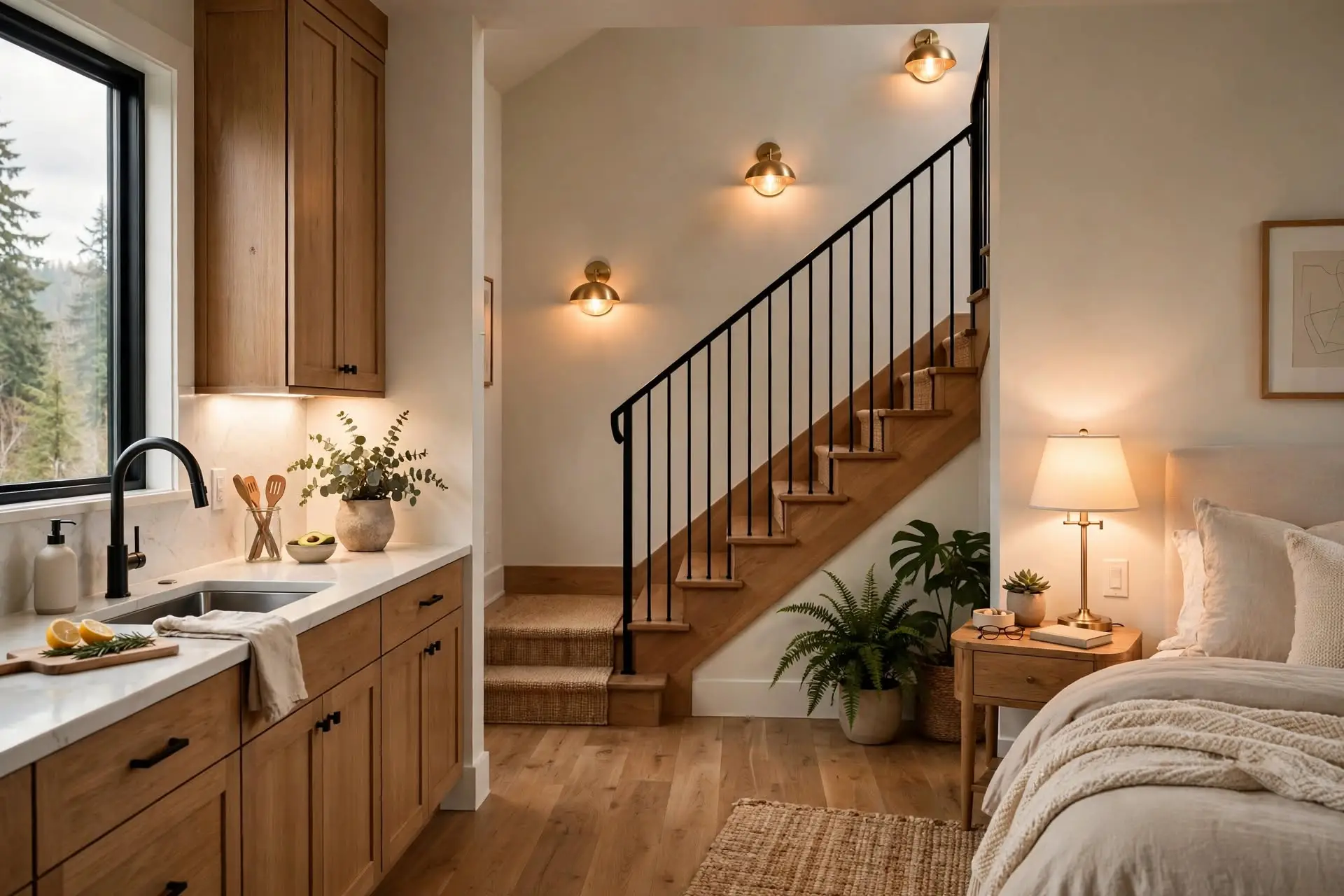
The single most useful kitchen lighting upgrade is under-cabinet lighting. LED strips or puck lights mounted under the upper cabinets throw light directly onto the counter surface where prep work happens. The lights fill in the shadows cast by the overhead fixtures and give the cook a clear view of the cutting board, the mixing bowl, and the recipe.
For most Redmond kitchens, three to five LED strips or six to eight puck lights cover the main work zones. Plug-in versions cost $30 to $100 per run and install in about ten minutes. Hardwired versions look cleaner but cost $200 to $500 per section once an electrician is involved.
The color temperature matters. Look for lights in the 3000K to 3500K range, which produces a warm white that is easier on aging eyes than the cooler 4000K to 5000K daylight tones. The warmer tones also read better against most kitchen finishes.
Pantry & Deep Cabinet Lighting
Deep cabinets and walk-in pantries are dark holes that force the user to reach into shadow to find items. Battery-powered motion-sensor lights installed inside these spaces solve the problem for about $15 to $30 per light. When the door opens, the light comes on. When the door closes, it turns off.
Most Redmond kitchens with a pantry benefit from one motion light in the pantry and one in each deep base cabinet. Total cost for a full kitchen upgrade is $100 to $200.
Stair Sconces & Hallway Lighting
Stairs are the highest-injury zone in a home for falls, and lighting matters more on stairs than in almost any other location.
Wall Sconces on Stair Landings
Wall sconces mounted at 42 to 48 inches off the floor on stair landings and along the wall of the stairs themselves give the eye a clear view of each step. The light comes from below eye level, which minimizes glare, and it stays out of the walking path.
Most Redmond homes with a two-story layout benefit from a sconce at the top of the stairs, a sconce halfway down or on the landing, and a sconce at the bottom. Cost for hardwired sconces runs $75 to $200 per fixture plus $150 to $300 per install location for the electrician.
For homes where hardwired sconces are not practical, battery-powered motion-sensor sconces with a similar look now exist from several manufacturers. They cost $30 to $80 per unit and mount with adhesive strips or small screws.
Stair Tread Lighting
For a more elegant option, low-voltage LED strips can be installed along the underside of each stair tread. The strips cast light down onto the step below, outlining each tread in a soft glow.
This option is more expensive, running $500 to $1,500 for a typical staircase installation, but it produces a lighting effect that looks like a design feature rather than a safety modification. For Redmond homeowners planning to sell the home eventually, this kind of installation adds visible value to the space.
Bedside Lighting for Nighttime
The bedroom-to-bathroom walk at night is one of the highest-risk moments in a senior’s day, and the lighting setup around the bed affects how that walk goes.
Motion-Sensor Night Lights
Small motion-sensor plug-in night lights placed low on the wall between the bed and the bathroom door cover the walking path without any user action. When the person swings their legs out of bed, the light comes on. When they get back in bed, it turns off a minute later.
The lights should be rated at 5 to 15 lumens for nighttime use. That is bright enough to see the floor without waking the person up fully or causing the pupil constriction that reverses dark adaptation. Cost is $10 to $25 per light. Most bedrooms need two to three lights to cover the full path.
Touch or Voice-Activated Bedside Lamps
For the bed itself, a lamp that turns on with a touch or a voice command works better than one with a small switch on the base. Touch-activated bedside lamps with three-way dimming let the user turn the light on at a low setting for a middle-of-the-night reading moment without blasting the room with full brightness.
Voice-activated smart bulbs work similarly and let the user turn lights on and off without reaching for anything. Cost for a smart bulb setup is $30 to $80 per lamp, plus a smart home hub if the home does not already have one.
Bathroom Path Lighting
Inside the bathroom itself, a small motion-sensor light near the toilet gives enough visibility for the actual bathroom trip without needing to turn on the overhead light. Some Redmond seniors keep a small light on continuously in the bathroom overnight, which works well as long as the light is dim enough not to affect sleep from across the hallway.
Prioritizing the Work
For most Redmond homes, the highest-impact lighting upgrades happen in the order of kitchen under-cabinet lighting first, then bedroom-to-bathroom motion lights, then stair sconces, then interior cabinet and pantry lights. This ordering puts the biggest daily benefits first and lets the household see the benefit of the changes before committing to the bigger electrical work.
Most of these upgrades can be done in a single afternoon by a handyman or electrician, and the total cost for a full house lighting upgrade for aging in place typically runs $500 to $2,000 depending on how many hardwired installations are included.